
Beeswax vs Soy vs Paraffin Candles: Health and Burn Comparison
- , by MLG
- 9 min reading time

Compare beeswax vs soy vs paraffin candles on soot, scent throw, burn time, and air quality, plus simple habits for a cleaner burn at home.
A candle lit at the dinner table does more than decorate a room. It sets a mood, slows everyone down, and quietly changes the air in the house. For families who already read the labels on food and cleaning products, the wax inside a candle is the next place worth looking. Three waxes cover nearly every candle on the shelf: paraffin, soy, and beeswax. They are not interchangeable.
They differ in where they come from, how much soot they produce, how strongly they carry fragrance, how long they burn, and what they cost. Understanding those differences makes the choice far simpler, both for gift shopping and for stocking up through the darker months of the year.
Why the Wax in Your Candle Matters
Most candles are made of soy wax, beeswax, paraffin wax, or blends of these. Each has distinct properties, including burn cleanliness, scent throw, longevity, and cost. Because of that, the wax itself decides most of what you notice: how fast the candle disappears, how far the fragrance travels, and how much visible soot gathers on the wall or shelf above it.
For health-minded households, soot is usually the first concern. Paraffin generally produces more visible soot than soy or beeswax, particularly if the wick is untrimmed or the candle is exposed to a draft. Beeswax candles burn cleaner than paraffin and synthetic soy blends. That single difference is the main reason eco-conscious buyers drift away from conventional paraffin candles.
The Three Candle Waxes Side by Side
Here is the short version of how the three most common candle waxes compare on the things shoppers ask about most.
| Wax | Where it comes from | Soot and burn behavior | Known for |
|---|---|---|---|
| Paraffin | Petroleum | Produces more visible soot than soy or beeswax, especially with an untrimmed wick or a draft; burns fast | Low cost and a strong scent throw |
| Soy | Plant-based wax | Preferred for its clean burn and environmental profile; synthetic soy blends burn less cleanly than pure soy | A cleaner burn than paraffin |
| Beeswax | Made by bees | Burns cleaner than paraffin and synthetic soy blends; releases a natural golden flame | A higher melting point and longer burn time, plus strong value per candle |
Paraffin Wax: Affordable, Strong Scent, More Soot
Paraffin is the most widely used candle wax in the modern world, largely because it is inexpensive. That low cost is why paraffin candles fill gift shops and supermarket aisles, and it is also why they tend to deliver a powerful scent throw. If the goal is a candle that fills a room quickly, paraffin has traditionally been the easy answer.
The trade-off shows up as soot. Paraffin generally produces more visible soot than soy or beeswax, particularly if the wick is untrimmed or the candle is exposed to a draft. It is derived from petroleum, it burns fast, and it produces more black soot than soy. None of that makes a paraffin candle a hazard in a well-ventilated room, but it does mean paraffin rewards good habits like wick trimming more than the other two waxes do.

Soy Wax: A Cleaner Burn With One Label to Check
Soy wax is preferred by many buyers for its clean burn and environmental profile. It is plant-based, which appeals to shoppers who want to move away from petroleum-derived wax, and it produces less visible soot than paraffin under normal burning conditions.
The detail worth checking is the blend. Not every candle sold as soy is pure soy. Synthetic soy blends exist, and beeswax candles burn cleaner than paraffin and synthetic soy blends. When comparing labels, look for candles that state their wax plainly. A short, clear ingredient list is usually a better sign than a long one.
Beeswax: Clean Burn, Golden Flame, and Strong Value
Beeswax is the wax our family pours by hand, and it earns its place on the shelf. Beeswax candles burn cleaner than paraffin and synthetic soy blends. They release a natural golden flame rather than the bright white flicker most people picture. Beeswax also has a higher melting point, and that higher melting point contributes to a longer burn time compared to both soy and paraffin candles.
Value matters here too. One long-running comparison of candle waxes makes the case that beeswax candles give you far more bang for your buck than scented soy or paraffin candles, because you are paying for burn time rather than fragrance load. A candle that lasts is a candle you replace less often.
Do Beeswax Candles Really Last Longer?
Usually, yes, and the reason is the melting point. Beeswax has a higher melting point than soy or paraffin, and that contributes to a longer burn time compared to both. One caveat worth knowing: some candle makers report that beeswax burns hotter and faster than soy, so real-world results depend on the wick, the size of the candle, and how well you care for it.
Soot, Particles, and Why Ventilation Still Matters
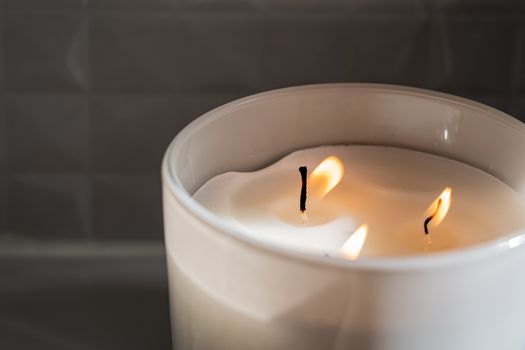
No candle is completely free of byproducts when it burns. Even a well-made beeswax taper puts some particles into the air, which is why ventilation matters for every wax type. Opening a window or running a fan reduces particle buildup, and that one habit does more for indoor air than any label claim on its own.
Drafts matter just as much. A candle sitting in a breeze or beside an air vent burns unevenly and tends to soot more, and paraffin shows that effect fastest. Move candles away from doorways, open windows, and the path of fans, then keep the wick trimmed before each burn.
Scent Throw: Where Paraffin Still Leads
Paraffin remains popular for two reasons: it is affordable and it throws scent strongly. If a room-filling fragrance is the priority, paraffin is traditionally the strongest performer, and that strength is a big part of why it stays so common in homes and gift shops.
Clean burn and heavy fragrance pull in different directions. A pure beeswax or pure soy candle tends to be the better starting point when the goal is the cleanest burn you can reasonably get, while a paraffin candle tends to win when maximum fragrance in the shortest time is what you are after.
Simple Habits for a Cleaner Burn in Any Room
Wax choice is the biggest lever, but how you burn a candle changes the outcome almost as much. These habits help with any wax.
- Trim the wick before each burn. An untrimmed wick is a leading cause of visible soot, especially with paraffin.
- Keep candles out of drafts, including doorways, open windows, and the path of fans and vents.
- Ventilate the room by opening a window or running a fan to reduce particle buildup.
- Choose beeswax or pure soy when clean burn is the deciding factor, and read labels for blends.
- Burn candles in a room with some air movement rather than a sealed, cramped space.
Choosing a Wax for Your Family's Home
If you want the simplest rule, use this one: choose beeswax or pure soy when indoor air quality is the deciding factor, and reach for paraffin when scent strength and price matter more than soot. Both approaches can work in a well-ventilated room.
Beeswax adds a few things the other two waxes do not. It burns cleaner than paraffin and synthetic soy blends, it produces a natural golden flame, it has a higher melting point, and it delivers a longer burn time compared to both soy and paraffin. Our hand-poured tapers, pillars, tealights, and votives are made from 100% pure beeswax, so the wax named on the label is the wax in the candle. That kind of simplicity is easy to live with, one evening at a time.
Frequently Asked Questions
Is beeswax healthier than soy or paraffin candles?
On burn cleanliness, beeswax has the edge. Beeswax candles burn cleaner than paraffin and synthetic soy blends, and paraffin generally produces more visible soot than soy or beeswax. Pure soy also burns more cleanly than paraffin. Your results still depend on ventilation, wick trimming, and whether the candle sits in a draft.
Do beeswax candles burn longer than soy candles?
Beeswax has a higher melting point, which contributes to a longer burn time compared to both soy and paraffin candles. Some candle makers report that beeswax burns hotter and faster than soy, so actual burn time varies with wick size and candle width. Trimming the wick and avoiding drafts helps you get the most from every candle.
Do candles labeled soy always burn clean?
Not always. Synthetic soy blends exist alongside pure soy, and beeswax candles burn cleaner than paraffin and synthetic soy blends. If clean burn is your priority, read the wax description carefully and favor candles that name their wax directly rather than a long list of blended materials.
Do I need to open a window when burning candles?
Ventilation is crucial, even with clean-burning waxes. Opening a window or using a fan reduces particle buildup in the room, and that advice applies to paraffin, soy, and beeswax alike. A little airflow helps far more than burning candles in a sealed room, no matter which wax you choose.
Which wax should I pick if strong scent matters most?
Paraffin remains popular because it is affordable and throws scent strongly, so it is traditionally the strongest performer for room-filling fragrance. If you want a cleaner burn instead, pure soy or pure beeswax are the better starting points. Many households keep a mix and ventilate the room either way.

